Artificial turf has become a popular surfacing solution for both residential and commercial fitness spaces thanks to its durability, performance, and clean, modern appearance.
From home gyms and private training areas to fitness centers, athletic facilities, and performance studios, more people are moving away from traditional flooring in favor of turf systems that support a wider range of movement and activity. The shift goes beyond aesthetics. Property owners and facility managers want surfaces that can handle high traffic, intense workouts, and everyday use while maintaining a consistent look and feel over time.
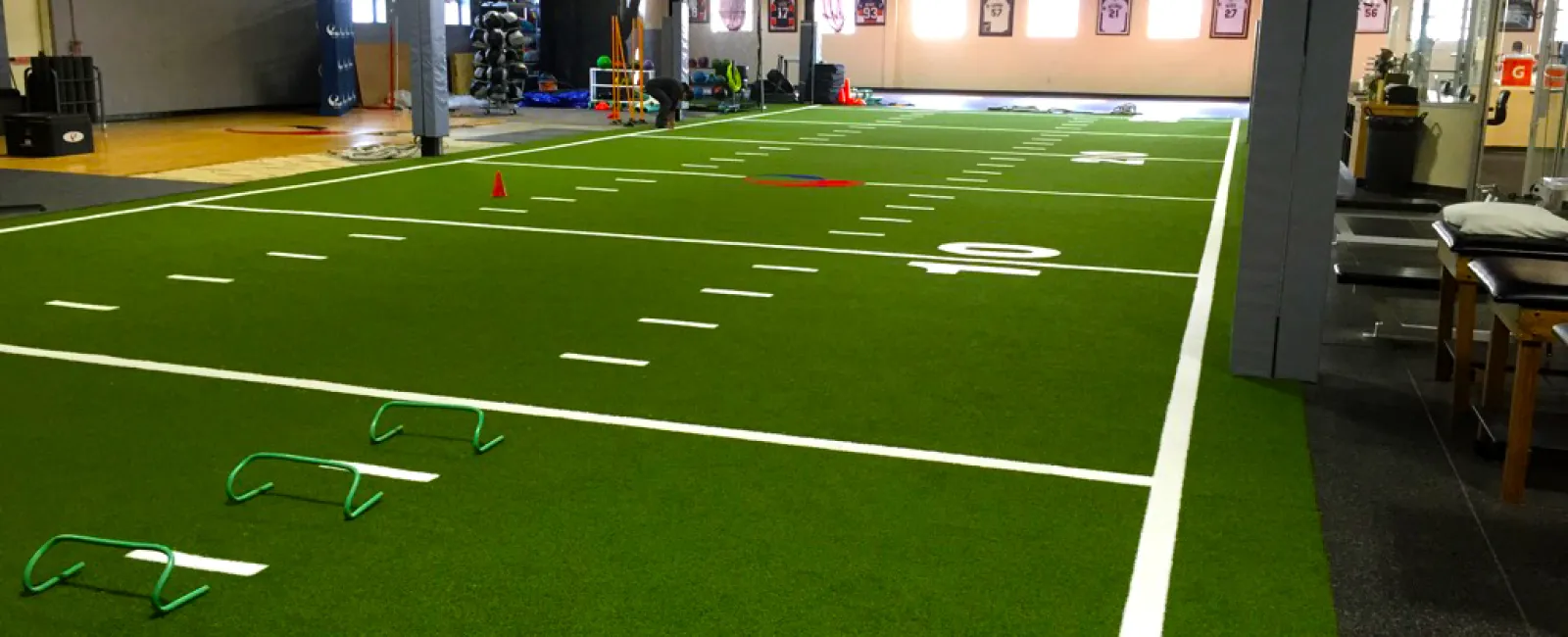
Commercial facilities often choose synthetic turf for activities like sled pushes, agility drills, functional fitness training, and strength workouts. Many recognize that the same performance qualities trusted on outdoor sports fields can translate seamlessly into indoor environments.
At the residential level, homeowners are also incorporating artificial turf into home gyms, wellness spaces, and recreational areas to create versatile, low-maintenance surfaces that are comfortable, durable, and visually appealing.
Whether installed in a large training center, boutique fitness studio, or home workout space, indoor turf can completely transform how a space is used.
The question is simple: Does artificial turf truly perform well in indoor fitness environments, or are traditional flooring options still the better choice?
Train Smarter with Artificial Turf
Indoor fitness spaces require surfaces that can handle explosive movement, quick direction changes, and repeated impact. Artificial turf provides a reliable, consistent surface designed to support a wide range of training activities.
Unlike traditional flooring that can become worn, uneven, or overly rigid over time, turf maintains a stable feel throughout the entire workout area. This consistency helps create a safer, more dependable training environment for both residential and commercial applications.
Homeowners, athletes, and trainers alike appreciate the traction turf provides during sprints, lunges, agility drills, and functional fitness exercises. The surface delivers dependable grip while still allowing for smooth, natural movement without excessive resistance.
Comfort is another major advantage. Many turf systems include optional padding layers that help absorb impact and reduce stress on joints during high-intensity workouts. Whether in a home gym, fitness studio, or large-scale training facility, this added support can improve comfort and help the surface perform well under frequent use.
The result is a durable, versatile surface that supports high-performance training while maintaining long-term visual appeal and functionality.
Durability
Indoor training facilities experience steady traffic throughout the day. Equipment is moved, weights are dropped, and athletes perform repetitive drills in the same areas. Flooring that cannot handle this level of activity begins to show wear quickly.
Artificial turf designed for gym environments is built to hold up under these conditions. The fibers resist matting, and the backing structure supports repeated pressure without breaking down. When installed correctly, turf maintains its appearance and performance across extended use.
Durability also ties into long-term value. Facilities that invest in high-quality turf systems may avoid the frequent repairs associated with other flooring options. This consistency helps maintain a professional appearance, which matters for both branding and client experience.
Versatility
One of the strongest advantages of turf is its ability to support multiple training methods within the same space. Strength training, functional fitness, and athletic conditioning can all take place on a single surface without the need for constant adjustments.
Sled training is a common example. Turf provides the resistance needed for pushing and pulling exercises without damaging the floor beneath. This allows trainers to incorporate dynamic drills that would not be possible on traditional gym flooring.
Group training environments also benefit from turf installations. Classes can move through circuits that include agility work, bodyweight exercises, and speed drills. The surface supports these transitions without requiring changes to the setup.
For facilities that want to maximize space, this flexibility makes a noticeable difference. Instead of dedicating separate areas to different activities, turf allows for a more efficient layout that supports an array of training goals.
Safety
Whether at a commercial space or a home gym, safety is always a top concern. The surface underfoot affects how athletes move, land, and recover during workouts. Turf systems can be designed to reduce impact while maintaining stability.
Padding layers beneath the turf can help absorb shock, which reduces strain during jumps and high-intensity drills. This feature supports a safer training environment, especially for athletes who train frequently.
Slip resistance also contributes to overall safety. Turf provides consistent traction, which helps prevent unexpected slips during fast-paced movement. This reliability becomes especially important in group training settings where multiple athletes share the same space.
Proper installation is instrumental in achieving these safety benefits. A poorly installed surface can create uneven areas or weak spots that compromise performance. Working with a knowledgeable turf installer helps avoid these issues and supports a more reliable outcome.
Maintenance
Indoor facilities require surfaces that are easy to maintain. Turf offers a practical solution that fits this need. Regular cleaning keeps the surface looking sharp, and debris can be removed without disrupting the structure of the turf.
Unlike some flooring options that show wear quickly, turf maintains a consistent appearance with minimal upkeep. This helps facilities present a clean and professional environment to members and clients.
Hygiene also factors into the decision. Turf systems can be treated to resist odors and bacterial buildup, which supports a healthier training space. This becomes especially important in high-traffic gyms where multiple users interact with the surface throughout the day.
Customizations
Indoor turf installations offer more than functional benefits. They also create opportunities for branding and visual impact. Facilities can incorporate custom markings, logos, or color variations directly into the turf design.
This level of customization helps gyms create a distinct identity. Training lanes, sprint tracks, and designated workout zones can all be built into the surface. These features improve organization while reinforcing the facility's overall look.
A well-designed turf area often becomes a focal point within the gym. It draws attention, encourages use, and heightens the overall training experience. This visual appeal can influence how clients perceive the quality of the facility.
Moving Beyond Traditional Gym Flooring
Rubber flooring and hardwood surfaces have long been used in gym environments. Each option has its strengths, though turf offers a different set of advantages that align with modern training demands.
Rubber flooring handles weightlifting well, though it may not support dynamic movement in the same way turf does. Hardwood surfaces work for specific sports, though they lack the versatility needed for functional training.
Artificial turf gym flooring bridges this gap by combining durability with flexibility. It supports both strength and conditioning without limiting how the space is used. This balance makes it an appealing choice for facilities that want to offer a wide selection of training options.
Why Choose Turf Tek Turf For Indoor Gym Applications
At Turf Tek, we supply high-performance turf products designed for demanding indoor fitness and training environments. Whether you are outfitting a commercial gym, athletic facility, performance center, or private home gym, our premium turf solutions are built to deliver durability, traction, and long-term performance.
Our product lineup is carefully selected to support a wide range of training activities, including strength training, agility work, sled pushes, and functional fitness exercises. With multiple turf styles and performance options available, we can help you choose the right surface for the way your space will be used.
We understand the expectations of both commercial and residential customers and focus on providing quality materials that offer a clean, professional appearance while standing up to daily use.
If you are considering indoor gym turf for your project, contact us today to learn more about our synthetic turf products and find the right solution for your space.